Networks
He worked on several approaches which includes Humanistic Psychology, and Existentialism. Humanistic Psychology that focuses on
the capacity for growth and achievement in human beings. May took these ideas a step further as he explored the purpose of anxiety
in human beings, while Existentialism focuses on man's search for meaning and purpose in life. But of all of these approaches, he
focuses on Existentialism which he established. May determined that human beings fear death because we cannot comprehend our own lack
of existence. Rolly May was an American Psychologist who is often referred to as the father of Existential Psychology. He was an in-
fluential American Psychologist who helped established a new branch of psychology.
He came to this approach through personal hardship. As explained, Existentialism deals on man's search for meaing and purpose in life.
May was stricken by tuberculosis, a bacterial lung infection, and was hospitalized for several years. During this illness, May began
to explore the meaning of life in face of death. This curiosity eventually led May to study clinical psychology, and was the recipient
of the first PhD in clinical psychology by Columbia University.
May believed that people may lack the courage to face their destiny and while in the process of fleeing from it, they give up much their
freedom. In contrast, healthy people challenge their destiny, cherish their freedom, and live authentically with other people and themselves.
They recognize the inevitability of death and have the courage to live life in the present.

Friends
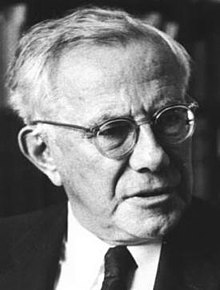
May introduces Paulus as he flees Germany and lives in New York. This is when May first meets Paulus as well. As the biography continues, May's begins to describe Paulus's character as an individual who lived with his emotions always showing. As Tillich's student, May writes, “I saw Paulus in many meetings of groups of people, blushing or looking in despair or pacing up and down the hall during a recess in the discussion.” May describes Tillich as a dear friend who is to be loved and understood. However, Rollo May is incredibly kind to Tillich's life and past. Rollo May glosses over Hannah's experience and relationship with Paulus.
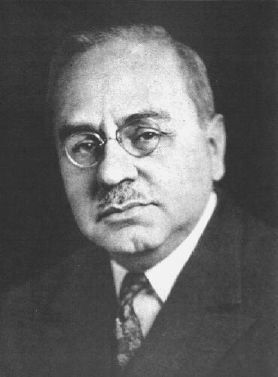
The similarity of basic principles of humanistic psychology to Alfred Adler's individual psychology has been recognized for some time. The present article adds to this the observation that all three leading cofounders of humanistic psychology, Abraham Maslow, Rollo May, and Carl Rogers. Adler's direct approach his holistic emphasis, and his concepts of social interest, guiding fiction, and pampered life-style are singles out. When Rollo May wasn't teaching, he traveled widely throughput Greece, Poland, Romania and Turkey. He attended the school taught by Alfred Adler. Deeply impressed by Adler, he nonethless considered Alder's theories overly simplistic and too general. May acknowledges the contribution of Alfred Adler in recognizing the value of early memories, describing adler as "a perspective and humble man, he was gifted with unusual sensitivity for children."
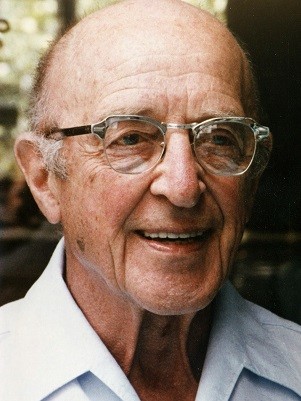
Rogers believed that every person could achieve their goals, wishes, and desires in life. When, or rather if they did so, self actualization took place. This was one of Carl Rogers most important contributions to psychology, and for a person to reach their potential a number of factors must be satisfied. May was much admired by Rogers, but Rogers disagreed with him on one vital point, believing in a basic human goodness interfered with and damaged by society and culture. May, for his part, dismissed this notion, arguing that humans constitute society and culture, and hence it is everyone’s capacity for both good and evil that gets expressed in society and culture. Each side affects and influences the other= the world makes things harder for the heart, but the heart makes things harder for the world. May regards the belief in inherent goodness naive, and thus views the Rogerian style of ‘humanistic’ psychology and therapy as essentially ‘narcissistic.’ It flatters the human and invents a scenario of healing too easy on the human.
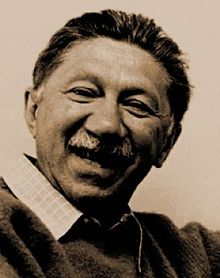
Maslow was best known for his hierarchy of needs, a theory of psychological health based on fulfilling innate human needs, culminating in self-actualization.Maslow, together with Rollo May, and some other philosophers, founded the American Association of Humanistic Psychology. Subscribing to a positive, optimistic view of human nature, he popularized the concept of self-actualization, based on his study of exceptionally successful, rather than exceptionally troubled, people.
May can be credited with being the editor, along with Ernest Angel and Henri F. Ellenberger, of the first American book on existential psychology: Existence, published in 1958, which highly influenced the emergence of American humanistic psychology (i.e., Carl Rogers and Abraham Maslow). This collection of essays introduced American readers to translations of work by existential-phenomenological psychologists such as Eugene Minkowski, Ludwig Binswanger, Erwin Straus and Roland Kuhn, and included essays by Werner M. Mendel and Joseph Lyons, as well as the editors. May's essays, "The Origins and Significance of the Existential Movement in Psychology" and "Contributions of Existential Psychotherapy" demonstrated that, for his time. Ernest Angel, was welcomed by Basic Books because of their enthusiasm for bringing out significant new material in the sciences of man.
Henri Frédéric Ellenberger was a Canadian psychiatrist, medical historian, and criminologist, sometimes considered the founding historiographer of psychiatry. Ellenberger is chiefly remembered for The Discovery of the Unconscious, an encyclopedic study of the history of dynamic psychiatry published in 1970. Henri and May worked together on Existence: A New Dimension in Psychiatry and Psychology (1958). They examined victim-offender interactions and stressed reciprocal influences and role reversals. These pioneers raised the possibility that certain individuals who suffered wounds and losses might share some degree of responsibility with the lawbreakers for their own misfortunes
Groups
Check-In
Snippet About Rollo May